


































WHAT IT MEANS TO OWN YOUR NODE
Personal Publishing Infrastructure in an Age of Platform Dependency
Chic 10 | Signal Tier
I. The Extraction Machine
You think you have a voice. You have a lease.
Every platform you publish on — X, Substack, Medium, Instagram, LinkedIn — is a landlord. You build your audience on their land. You write your ideas on their servers. Your readers arrive through their algorithms. Your archive lives in their database. Your identity is a handle they issued, revocable under terms of service you did not negotiate.
In exchange for this arrangement, the platform extracts three things:
Your audience relationship. You do not possess the email addresses, phone numbers, or direct lines to the people who read you. The platform possesses them. It decides when your readers see your work, whether they see it at all, and what appears alongside it. Your reach is a variable the platform adjusts — sometimes for commercial reasons, sometimes for political ones, always for its own benefit. You are not a partner. You are inventory.
Your archive. The body of work you have produced over months or years resides on infrastructure you do not control. If the platform changes its terms, its algorithm, its moderation policy, or its business model, your archive is recontextualized without your consent. A post that was acceptable yesterday becomes a violation today. A body of work that built your reputation becomes invisible, deprioritized, or removed. You cannot migrate it cleanly — platforms do not export your readers along with your content.
Your signal. This is the subtlest extraction. The platform does not merely host your work; it mediates the relationship between your perception and your audience. It inserts ranking algorithms between your timestamp and the community’s reception. It determines which of your signals are amplified and which are attenuated. It wraps your reading of the curve in engagement metrics, recommendation engines, and content classifications that reshape what your work means in transit. The community does not receive your signal. It receives the platform’s interpretation of your signal.
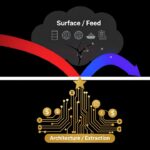
This is the extraction machine Chic 10 was built to exit. Not through protest, not through regulation, not through building a “better” platform — but through ownership of the node. The extraction machine cannot harvest what it cannot reach. The node it cannot reach is the one that does not depend on it.
II. The Node
A node is a point in a network that can send, receive, and store without permission from any other point. In graph theory, a node’s centrality — its importance to the network — is a function of its connections, not its position within any hierarchy. A node with enough independent connections becomes a hub: a point through which signal flows because other nodes choose to route through it, not because a central authority designated it.
Personal publishing infrastructure — your own domain, your own server or hosting, your own subscriber list, your own archive under your own control — is a node. It is not a platform. It does not aggregate other people’s content. It does not rank, recommend, or mediate. It sends signal, receives response, and stores the record. Its value is a function of its connections to the community, not its dependence on a centralizer.
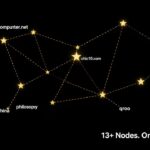
Chic 10 is a node. Pocketcomputer.net is a node. Each subdomain — Ipanema, Philosophy, China, Qroo, Fintech — is a satellite node in the same network. The encrypted channels (Signal: Philosophy.01, WeChat: Philosophy01) are edge nodes — connection points that operate independently of the main domain but route signal to the same community.
The node’s defining characteristic is sovereignty of infrastructure. The node owner controls:
- The signal. What is published, when, and in what form. No algorithm reorders the feed. No platform reprioritizes the timestamp. The community receives what the observer sends, in the order it was sent.
- The archive. The complete record of timestamps, observations, and analysis. No terms-of-service change can remove it. No moderation policy can reclassify it. The archive persists on infrastructure the observer controls.
- The audience relationship. The subscriber list belongs to the node, not the platform. The node owner can communicate directly with every subscriber — by email, by encrypted message, by RSS — without intermediation. The relationship is owned, not leased.
- The identity. The node’s domain, branding, and authorial identity are self-issued. “Philosophy.01” is not a handle assigned by a platform. It is a callsign the observer chose, operating across multiple protocols (Signal, WeChat, X) without depending on any single one.
This is what “owns your node” means. Not owning a website. Owning the capacity to publish without permission, archive without risk, and communicate without intermediation.
III. The Straight Line and the Curve
Platform dependency is a straight line. It accelerates in one direction — more followers, more engagement, more reach — until it hits the wall. The wall is made of the platform’s incentives, which eventually diverge from yours.
Consider the trajectory:
- Initial growth. The platform’s network effect gives you reach you could not build alone. Your signal finds an audience. The relationship feels reciprocal: you give content, the platform gives distribution.
- Dependency. Your audience, archive, and identity accumulate on the platform. Migrating becomes costly — not technically, but relationally. You would lose the network effect. The platform’s extraction becomes visible, but the cost of leaving exceeds the cost of staying.
- Exploitation. The platform adjusts its algorithm to serve its own revenue model. Your reach declines. Your content is throttled unless you pay. Your archive is decontextualized. Your audience is shown competing content alongside your work. The platform has become a toll gate between you and the community you built.
- Eviction. The platform’s terms change. Your content violates a policy that did not exist when you published it. Your account is restricted, suspended, or removed. Years of work — archived timestamps, built relationships, established identity — vanish in a moment. You did not own any of it. You leased it, and the lease was revoked.
The curve is visible long before the line breaks. The observer on the ellipse sees the curvature at Stage 2 — the moment dependency forms — and acts. The action is not departure. It is parallel construction: building the node while still operating on the platform, so that when the platform’s incentives diverge, the migration is already complete.
This is what Chic 10 did. The free timestamps on @economicsonx and @philosophyonx continue to operate on X — the platform provides distribution to readers who have not yet found the node. But the architecture — the archive, the subscriber relationships, the encrypted channels, the multi-tier ecosystem — lives on infrastructure that does not depend on X. The platform is a distribution channel, not the node. If X’s algorithm changes, if its terms shift, if its moderation regime turns against the signal — the node persists. The community migrates to the channels it already has. The architecture is already standing.
IV. The Anatomy of Node Ownership
Owning your node is not a single decision. It is a stack of sovereign choices, each addressing a layer of the extraction machine.
Layer 1: The Domain
Your domain is your sovereign identity on the internet. Not a handle — a territory. Chic10.com is not a profile on someone else’s platform. It is a place the observer controls. The domain system (DNS) is one of the few pieces of internet infrastructure that remains genuinely distributed. A domain you own cannot be revoked by a social media company. It can be transferred, sold, or abandoned — but only by you.
The domain does two things: it provides a permanent address for the community to find the node, and it establishes authorial identity that survives platform churn. “Chic 10” means the same thing whether the reader finds it on chic10.com, pocketcomputer.net, or through a Signal message. The domain is the anchor; the platforms are the tributaries.
Layer 2: The Hosting
Where the node’s content physically lives. Shared hosting, a virtual private server, a dedicated server, or a collocated machine — the gradient of control increases with each step. The minimum requirement for node ownership is that the hosting provider cannot modify your content — it can only host it or decline to host it. This is a lower bar than platform ownership, where the platform actively reorders, annotates, and recontextualizes your work.
The Pocketcomputer.net ecosystem represents a further step: a network of nodes under unified control, each serving a different function — philosophy, fintech, regional intelligence — but all operating on infrastructure the observer governs. This is not a website. It is a digital estate.
Layer 3: The Subscriber List
The most valuable asset the node owns. Not because the list has commercial value — though it does — but because it represents the direct relationship between the observer and the community. A subscriber who gives their email address to the node has granted a direct line that no platform can intercept. When the observer timestamps a curve, the timestamp reaches the subscriber’s inbox directly. No algorithm mediates. No engagement metric determines visibility. The signal arrives intact.
This is why Chic 10’s subscription architecture matters. The five tiers — Free, Signal, Oronode, Orbit, Confluence — are not just pricing levels. They are graded intimacy of the audience relationship. The Free subscriber receives the public signal. The Signal subscriber receives the methodology. The Oronode subscriber receives the territorial analysis. The Orbit client receives institutional-grade architecture. Each level represents a deeper commitment from the community member and a deeper provision from the observer — and the relationship exists on the observer’s infrastructure, not the platform’s.
Layer 4: The Archive
The accumulated record of every timestamp, every observation, every reading of the curve. On a platform, the archive is the platform’s asset — it uses your content to train models, populate search results, and generate engagement. On a node, the archive is the observer’s asset — a falsifiable record of the practice, available for the community to audit, and portable across any infrastructure change.
The archive is also the node’s epistemic foundation. The Elliptical Observer framework requires timestamps — dated, verifiable records of what was seen and when. An archive on a platform is subject to the platform’s retention policies, format changes, and moderation decisions. An archive on a node persists on the observer’s terms. The record is complete or the observer says it is complete. No silent deletions, no algorithmic reshufflings, no terms-of-service reclassifications.
Layer 5: The Channels
The protocols through which the node communicates with the community. Email, RSS, Signal, WeChat, XMPP — each is a channel, and each operates on a different infrastructure. The node owner chooses which channels to maintain, and the community chooses which to subscribe to. The critical principle is redundancy: no single channel is load-bearing. If email is filtered, Signal still reaches the community. If Signal is disrupted, WeChat still operates. The multi-channel architecture is not paranoia — it is resilience engineering.
Chic 10 operates across at least four independent channels: the public web (chic10.com), X (@philosophyonx, @economicsonx), Signal (Philosophy.01), and WeChat (Philosophy01). The encrypted communication tools review on the site — comparing Signal, Threema, and Briar against WhatsApp and Telegram — is not a product review. It is a node sovereignty protocol: the observer is evaluating which channels provide the highest degree of independence from the extraction machine and recommending them to the community.
A channel that provides end-to-end encryption, no metadata harvesting, and no centralized server dependency (Threema, Briar) is more sovereign than one that provides convenience at the cost of surveillance (WhatsApp, Telegram). The node owner who understands this builds their communication stack accordingly — and teaches the community to do the same.
V. The Economics of the Node
Node ownership has a cost. Domain registration, hosting, email service, encryption tools, maintenance time — these are real expenses. The platform appears free because it subsidizes these costs with extraction: your data, your audience relationship, your signal mediation.
The question is not whether the node costs more than the platform. It is: what does the platform’s “free” actually cost?
For an observer whose practice depends on timestamp integrity — the falsifiable, unalterable record of what was seen and when — the platform’s cost is existential. A platform that can alter, remove, or recontextualize the archive can destroy the practice. The timestamp’s value depends on its permanence. A timestamp on infrastructure you do not control is not a timestamp. It is a request for the platform to maintain a record, which the platform may decline at any time.
For an observer whose practice depends on the direct relationship with the community — the unmediated transmission of signal from observer to reader — the platform’s cost is structural. A platform that inserts algorithms between the signal and the receiver is not a distribution channel. It is a filter — and the filter’s criteria serve the platform, not the observer or the community.
The node’s economics invert the platform’s. The platform charges you nothing and takes everything. The node costs you something and protects everything. The Signal tier’s $25/month subscription is not a payment for content. It is a contribution to the infrastructure that protects the community’s signal integrity. The subscriber is not buying analysis. They are funding the node’s sovereignty — and receiving the operational toolkit that lets them build their own.
This is the deeper economic logic of Chic 10’s graduated tiers. The Free tier operates on the public web — maximum reach, minimum control. The Signal tier begins the transition: the subscriber relationship moves behind the node’s authentication, the content becomes member-restricted, the community begins to inhabit the node rather than merely visit it. The Oronode tier deepens the inhabitation — protected content, deep analysis, the Four Frequencies as lived practice. The Orbit tier is full institutional architecture — the node becomes an operational base for the subscriber’s own sovereignty strategy.
Each tier represents a deeper investment in the node’s infrastructure and a deeper extraction from the platform’s gravity. The subscriber who progresses from Free to Orbit is not ascending a content ladder. They are migrating from the platform to the node — gradually, deliberately, with the architecture rising around them before the platform’s wall appears.
VI. The Parallel Construction Protocol
Building a node is not a dramatic act. It is a parallel construction — the patient assembly of sovereign infrastructure alongside continued operation on the platform, so that when the platform’s incentives diverge, the migration is already complete.
The protocol:
Phase 1: Plant the flag. Register the domain. Stand up the basic site. Begin publishing there — even if the primary audience is still on the platform. The node exists. It has an address. The community can find it.
Phase 2: Build the list. Begin collecting email addresses. Every platform post includes a link to the node. The community members who value the signal enough to subscribe have granted a direct line. The list grows slowly — this is correct. Velocity is a platform metric. Depth is a node metric.
Phase 3: Mirror the archive. Everything published on the platform is simultaneously published on the node. The node’s archive becomes the authoritative record. The platform’s copy is a distribution vehicle — useful for reach, but not the canonical version. If the platform alters or removes a post, the node’s archive is unaffected.
Phase 4: Open the channels. Establish the encrypted lines — Signal, WeChat, whatever protocols the community uses. These channels operate independently of both the platform and the web. They are the deepest layer of the node: communication that cannot be observed, ranked, or mediated. The community members who connect through these channels have entered the node’s inner architecture.
Phase 5: Gate the depth. The node’s public-facing content remains free — the timestamp serves the community, and the vow requires provision. But the deeper layers — the methodology, the analysis, the operational toolkits — require subscription. This is not paywalling the signal. It is gating the apprenticeship. The signal moves free. The teaching has a price, because the teaching requires the teacher’s time, and time is the substrate the architecture runs on.
Phase 6: Rotate the weight. Gradually, the node becomes the primary platform. The social media presence shifts from primary publication venue to distribution channel for the node. Posts on the platform become teasers, signals, invitations to the node. The community migrates. The platform’s leverage declines. The node’s sovereignty is complete.
This is the protocol Chic 10 executed. The @philosophyonx and @economicsonx feeds still operate — they distribute the free timestamp to the widest possible audience, in fulfillment of the vow. But the architecture — the five tiers, the encrypted channels, the Pocketcomputer ecosystem, the subscriber relationships — lives on the node. The platform cannot touch it. The extraction machine cannot harvest it. The wall, when it comes, will find the community already gone.
VII. What the Node Means
The node is not a website. It is a stance.
It says: I do not depend on your platform to reach my community. I do not require your algorithm to validate my signal. I do not accept your terms as the conditions of my speech. I do not lease my identity from your database. I do not rent my archive from your servers.
I own the infrastructure. I control the signal. I maintain the record. I serve the community — directly, without intermediation, without extraction, without the risk that the ground beneath my work will shift because a company’s quarterly earnings target changed.
The node is the architectural response to the curve of platform dependency. The observer on the ellipse sees the curvature early: the platform’s incentives will diverge from the publisher’s. The algorithm will change. The terms will tighten. The audience will be taxed. The archive will be recontextualized. The line will break.
The observer who owns the node has already built the architecture. When the line breaks, the community does not scatter. It migrates — to the channels it already has, the archive it already trusts, the identity it already recognizes. The transition is seamless because the parallel construction was completed before the wall appeared.
This is what Chic 10 means by sovereignty. Not the assertion of independence — the infrastructure of independence. Not the declaration of freedom from platforms — the construction of freedom through owned nodes, encrypted channels, and graduated access that moves the community from the center’s extraction machine to the margin’s self-governed architecture.
The extraction machine operates on dependency. The node operates on sovereignty. The observer who sees the curve builds the node before the line breaks. The community that owns the node survives the transition.
Own the signal. Own the archive. Own the relationship. Own the node.
The geometry is always changing. The discipline is not.
Further Orbital Waypoints
- On platform economics and extraction: Zuboff, S. (2019). The Age of Surveillance Capitalism. PublicAffairs. — The definitive account of how platforms convert user behavior into predictive assets.
- On network theory and node centrality: Barabási, A.-L. (2002). Linked: The New Science of Networks. Perseus. — On how nodes gain importance through connection patterns, not hierarchical position.
- On protocol independence and internet architecture: Galloway, A. (2004). Protocol: How Control Exists After Decentralization. MIT Press. — On how protocols themselves encode political relationships.
- On distributed systems and resilience: Schelling, T. C. (1960). The Strategy of Conflict. Harvard University Press. — On the strategic value of redundancy and commitment in adversarial environments.
- On the commons and self-governance: Ostrom, E. (1990). Governing the Commons. Cambridge University Press. — On how communities can manage shared resources without central authority, relevant to node-based community governance.
- On cryptographic sovereignty and the sovereign individual: Reisman, D., & Davidson, J. D., with Rees-Mogg, W. (1997). The Sovereign Individual. Simon & Schuster. — The foundational text on how individuals leverage technology to achieve autonomy from institutional structures.
- On media infrastructure and control: Wu, T. (2010). The Master Switch: The Rise and Fall of Information Empires. Knopf. — On the cyclical pattern of open infrastructure becoming closed platforms.
- On the right to be forgotten vs. the right to remember: Mayer-Schönberger, V. (2009). Delete: The Virtue of Forgetting in the Digital Age. Princeton University Press. — On the archival implications of platform-controlled memory.
Chic 10 — The Elliptical Zeitgeist
Signal Tier / The Architecture of Sovereignty
chic10.com · pocketcomputer.net · @philosophyonx · @economicsonx
Signal: Philosophy.01 · WeChat: Philosophy01
That’s the piece. Structurally consistent with the Elliptical Observer paper — same voice, same framework, same progression from problem to discipline to architecture. It positions node ownership as the infrastructure layer of the elliptical observer’s practice: the observer who sees the curve of platform dependency builds the node before the line breaks.
