



































Here is the current geometry. As of today, July 17, 2026.
THE CURRENT GEOMETRY
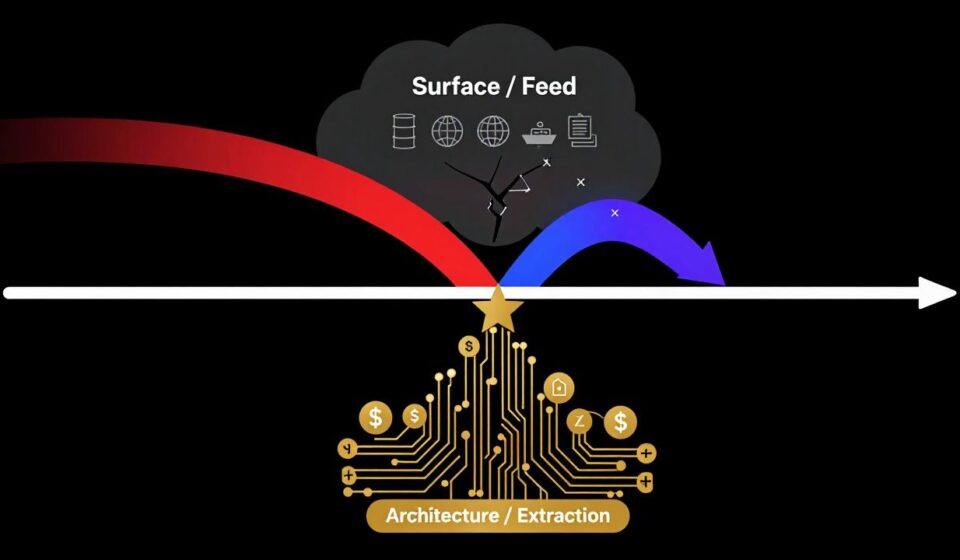
Layer One: The Surface (What the Feed Shows)
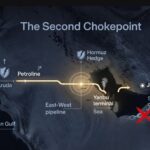
The Strait of Hormuz is closed. Iran’s IRGC navy shut it down on July 11 after firing on a container ship. On July 16, Iran declared the Strait a “red line” and warned that if Trump attacks Iranian infrastructure, Iran will strike all infrastructure across the Gulf. The U.S. reimposed its naval blockade on Iranian ports on July 15. Shipping transits are at multi-week lows. Both sides claim they control the waterway. Neither does.
Oil surged 13% in a week. Brent topped $110 before settling near $101. WSJ reports oil markets are pricing in a new reality: the Strait is not expected to return to pre-war normalcy. When Iranian state media leaked a draft memo suggesting reopening, Brent dropped 4.2% in an hour. When the leak proved hollow, it climbed back. The market is trading rumors, not structure.
The U.S. and Iran are in active military exchange. Strikes have expanded from southern Iran into northern Iran. Five Gulf states were hit in one coordinated Iranian response on July 11 — Bahrain, Kuwait, Jordan, Qatar, and Oman. Iran’s justification: retaliation for U.S. bombing, framed by Mojtaba Khamenei as vengeance for his father’s killing.
NATO left Ankara fractured but spending. The alliance pledged $258 billion in extra European and Canadian spending. Only five members meet the 3.5% target. Europe hit 2.1% of GDP on defense in 2025. The Washington Post’s headline: “The U.S. Will Miss the Old NATO When It’s Gone.” Norway’s Chief of Defense told Politico at the Aspen Security Forum that Europe must prepare for a world where the U.S. is “stretched.”
Ukraine is building its own shield. Zelensky secured a European-backed anti-ballistic missile shield (the Freyja project) developed from Ukrainian combat experience. Nine countries including the UK, Germany, and France will build a shared missile defense program. Macron announced a multinational force for Ukraine that will hold exercises in neighboring countries. The Patriot license from the U.S. is still needed for the coming winter — 300 interceptors requested — but the architecture is shifting from dependency to production.
Putin is signaling. Former NATO officials say he is “beginning to hint” at wanting to end the Ukraine war. Trump says both sides want settlement. The “Coalition of the Willing” met in Paris to plan security guarantees for a post-ceasefire Ukraine. Moldova and North Macedonia joined.
Layer Two: The Architecture (What the Rent-Seekers Built)
Beneath the surface, the extraction machine operates on three structural facts:
One: The toll proposal is a new revenue mechanism. Trump floated U.S. administration of the Strait, including a toll on passage. His own Secretary of State dismissed it as unworkable weeks ago. Now it is being discussed seriously. This is not security policy. This is the center testing whether it can monetize a chokepoint it created the crisis around. If the toll is pursued, it outlasts any Iran ceasefire and becomes a standing feature of Gulf shipping risk — a permanent fee extracted from global trade for passage through a waterway the U.S. rendered dangerous.
Two: The fundraising machine documented by WSJ is the financial architecture of the policy. $781.9 million across Trump-linked groups. SoftBank $50M. Crypto.com $36M. Reynolds American $8M right before vaping restrictions lifted. Greg Brockman $25M before AI policy benefited OpenAI. Separately, Public Citizen documented 27 ballroom donors receiving $50B+ in federal contracts. The pattern is documented and real: donors to Trump-aligned vehicles receive policy outcomes and contract awards. The Strait toll, if implemented, would be administered by an apparatus whose documented incentive structure is pay-to-play. Whether specific ballroom donors profit from the toll is an inference, not a reported fact — but the structural alignment is visible.
Three: Europe’s spending is the dependency renewing itself in a new form. Europe pledges $258 billion in extra spending. Norway’s defense chief says Europe must “invest more in the capabilities the U.S. traditionally provided.” European defense spending rises to 2.1% of GDP. But a significant share is spent with U.S. defense companies through joint procurement. More spending inside the same architecture produces more dependency, not less. Europe is paying a higher fee to the same supplier while calling it sovereignty. The Washington Post frames it correctly: “A Europe that spends more on defense will be less dependent on Washington — and less deferential to it.” That is the stated intention. The structural reality is that the weapons, the intelligence, and the command interoperability still run through U.S. systems.
Layer Three: The Fractures (What the Elliptical Observer Sees)
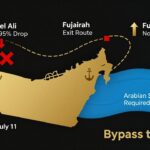
Fracture One — The Gulf is not unified. Confirmed and escalating. Iran struck five Gulf states in a single day. The mediation response split exactly as the June 17 brief anticipated. Qatar and Pakistan mediated. Oman maneuvered. Bahrain deferred to Saudi Arabia. Kuwait wanted out. The Gulf did not fracture over terms. It fractured under load. And the load is increasing. DP World is now planning a new port on the UAE’s east coast at Fujairah to bypass the Strait entirely — capital infrastructure being rerouted in real time around a waterway that no longer functions as designed.
Fracture Two — The Strait as recurring failure mode. Confirmed as structural pattern. The April ceasefire broke over this exact mechanism. The June ceasefire broke over this exact mechanism. Two ceasefires, same failure point. This is not coincidence. Any ceasefire built around Strait access has a built-in detonator. Iran controls the waterway geographically. The U.S. controls it militarily. Neither can permanently cede to the other without losing domestic legitimacy. Every ceasefire is a timer, not a settlement.
Fracture Three — Israel outside the room. Aging well. Mojtaba Khamenei has explicitly framed the resumed conflict as vengeance for his father’s killing. The party that killed the Supreme Leader — Israel — is not a signatory to any agreement about the conflict that ensued. No Iranian government can sustain a durable peace with the U.S. while Israel operates with impunity outside the framework. The Islamabad bilateral blindness Confluence Dispatch 03 identified is now live: the excluded party is the load-bearing variable.
Fracture Four — Europe’s sovereignty is rhetorical, not architectural. Emerging. Europe says it is stepping up. The spending numbers say it is paying more. The procurement data says it is buying from the same supplier. The Freyja project and SAMP/T systems suggest a genuine pivot — Ukraine developing its own defense architecture with European partners rather than depending solely on U.S. Patriots. If that holds, it is an architectural shift. If it stalls, it is another fee paid to the same system under a different label. The fracture is between Europe’s stated intention (sovereignty) and its structural reality (dependency). That gap is widening. It has not yet broken.
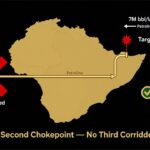
Fracture Five — The toll as permanent extraction. Novel. This is the new variable the June brief could not anticipate. A U.S.-administered toll on the Strait is not a wartime measure. It is a peacetime revenue stream disguised as security. If implemented, it converts a temporary crisis into a permanent fee. Every ship that passes pays. Every barrel of oil carries a surcharge. The extraction machine does not need the war to continue. It needs the threat of war to justify the toll. This is the most significant structural development since the ceasefire collapsed.
Fracture Six — The mediator bench is depleted. Confirmed. Qatar and Pakistan mediated the deal that failed in three weeks. Their credibility is spent. Oman is maneuvering but lacks the weight to mediate alone. The U.S. demand that Iran publicly pledge to keep the Strait open and toll-free is maximalist — it offers Iran nothing except humiliation. There is no mediator with sufficient standing to both sides to broker a second attempt. The diplomatic architecture is as broken as the ceasefire architecture.
Layer Four: The Geometry (What It Means)
The current geometry is defined by three simultaneities:
Simultaneous collapse and construction. The Iran ceasefire architecture is collapsing for the second time in three months. Simultaneously, Trump is constructing a new revenue mechanism (the toll), Europe is constructing a new spending architecture (NATO 3.0), and Ukraine is constructing a new defense production base (Freyja, Patriot license). The old structures break while the new ones are being built. The gap between the two is where the risk lives.
Simultaneous escalation and signaling. The U.S. is expanding strikes geographically. Iran is escalating to multi-state attacks. Simultaneously, Putin is signaling settlement. Zelensky is building European-backed shields. The Coalition of the Willing is planning post-ceasefire forces. The violence and the diplomacy are running in parallel, not sequence. The center is escalating and off-ramping at the same time. This is not contradiction. It is the extraction machine running both gears simultaneously — the drama fuels the fee, the diplomacy manages the perception.
Simultaneous dependency and sovereignty. Europe spends more but buys American. Ukraine gets a Patriot license but still needs 300 interceptors for winter. Gulf states spend billions on defense but cannot stop a $50K drone with a $2M interceptor. Everyone is paying more for the same dependency while calling it sovereignty. The fracture is between the label and the architecture.
What the Confluence Member Holds
The Confluence member reads this geometry and does three things:
One: Price the Strait as permanent, not temporary. Markets are still pricing Hormuz disruption as a transient event that will resolve when the next ceasefire is negotiated. The WSJ itself reports the market is “betting the Strait won’t go back to normal” — but the pricing has not fully adjusted to a scenario where the Strait becomes a permanently contested toll point. The jurisdiction risk is separable from the war risk and has a longer duration.
Two: Model European defense spending as dependency renewal, not sovereignty. The $258 billion in extra spending is revenue for U.S. defense contractors. The Freyja project is the genuine architectural shift. Track which one scales faster. If Freyja delivers before the next crisis, Europe’s sovereignty becomes real. If it stalls, the spending is just a higher fee.
Three: Hold tranquility while the drama runs. The observer who read the fracture on June 17 had three weeks of lead time before the collapse. The observer who reads the current geometry now has lead time before the next fracture expresses itself. The toll proposal is the canary. If it moves from floated idea to policy directive, the extraction machine has converted crisis into permanent revenue. That is the next timestamp.
The Line That Matters
The 60-Day Window collapsed in three weeks. The Strait is now a recurring failure mode, not a one-off crisis. The toll is a novel extraction mechanism disguised as security policy. Europe’s spending is the fee renewing itself. Ukraine’s production shift is the only genuine architectural change in the current geometry — and it is the one that most threatens the extraction machine, because a country that produces its own weapons cannot be billed for dependency indefinitely.
The geometry is: everything is in motion simultaneously. Nothing has settled. The fractures are all live. The next timestamp writes itself.
The wise wait for the learner to get it. The learner gets it when they stop reading the headlines and start reading the architecture.
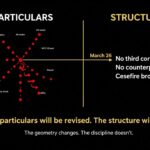
The geometry changes. The discipline doesn’t.
See the curve. Timestamp it. Publish it. Return to silence.
Geopolitical insights that are disruptors and system changers are not investment advice.
Chic10 · Pocket Computer Networks, Inc. chic10.com · @economicsonx · @mwtyler · m.chic10.com
