


































FRACTURE CLOCK — LEDGER NOTE
Filed July 27, 2026 | Confluence / Orbit distribution
The Second Chokepoint
When the insurance policy against Hormuz becomes the target itself.
| STATE | IRREVERSIBILITY | MARKER TYPE |
|---|---|---|
| C → D | High — no third corridor exists | Structural / infrastructural |
The Fracture
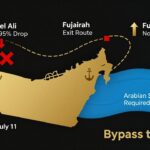
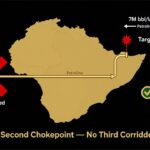
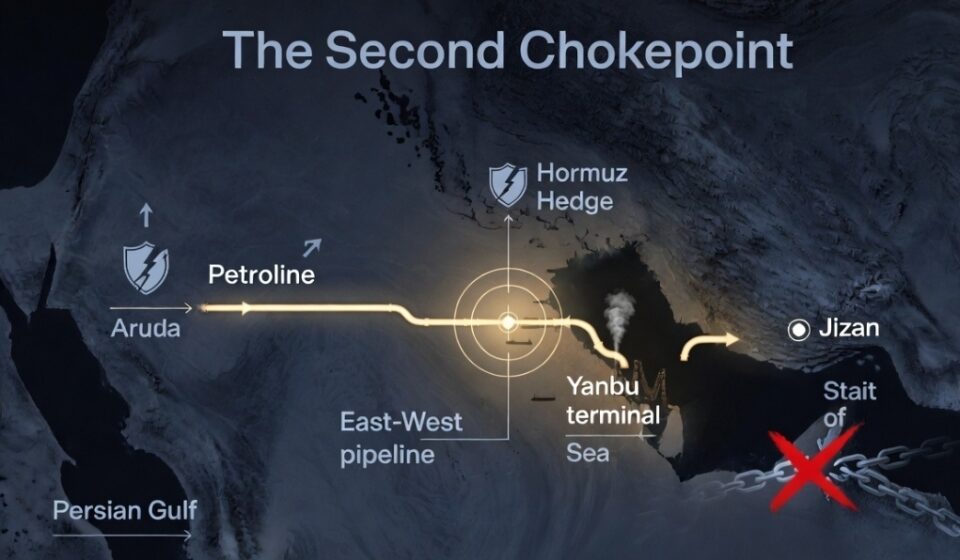
On July 25, Houthi strikes reached the Jizan refinery and the Yanbu terminal complex on Saudi Arabia’s Red Sea coast. Yanbu is not a secondary facility. It is the terminus of the Petroline, the East-West pipeline Saudi Arabia built in the 1980s as a contingency against exactly this scenario — a hostile power closing the Strait of Hormuz. Since Iran effectively shuttered Hormuz earlier this year, the Petroline has carried roughly seven million barrels per day to the Red Sea coast, and Yanbu has handled the overwhelming majority of the kingdom’s seaborne crude exports. There is no third corridor. Kuwait, Qatar, and Iraq have no comparable overland alternative — their Hormuz-dependent exports remain fully stopped.
Why This Is Structural, Not Incidental
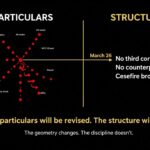
The distinction that matters here is not that Saudi oil infrastructure was attacked — it has been, intermittently, since March. What changed on July 25 is that the attack reached the one node without a backup. The Petroline was built specifically to survive a Hormuz closure. It was never designed to survive a second front opening behind it. A strike on the Gulf coast is an attack on the primary route with a fallback still standing. A strike on Yanbu is an attack on the fallback itself, with nothing behind it. That is the irreversibility marker: this is not a fluctuation in an ongoing conflict, it is the closing of the option space. Every dollar and design decision that went into the Petroline as insurance is now sunk cost against a threat model it wasn’t built for.
A Note on Sourcing Discipline
Widely circulated framing of this event — including at least one Substack analysis — has attached a specific figure (“crippled 40%+ of Saudi bypass oil”) to the Jizan/Yanbu strikes. That number does not yet appear in wire reporting or ship-tracking data reviewed for this note, and its provenance is unclear. The structural claim above — that Yanbu is the sole remaining export corridor and was directly targeted — is corroborated across multiple independent sources. The specific damage-percentage claim is not, and should be treated as unverified until a tracking-data source (Kpler, Signal Ocean, or equivalent) confirms an actual throughput drop. This is the difference between reporting the fracture and reporting someone else’s unverified arithmetic about the fracture.
The Two-Front Reframing
The secondary claim in circulation — that this forces a genuine two-front posture on Washington — is directionally sound but understates what actually narrows. Washington was never fighting a naval war for Hormuz and a separate naval war for the Red Sea; both sit under the same Fifth Fleet area of responsibility and the same carrier-availability constraint. What narrows is not options in the abstract but the credible timeline for reopening either chokepoint. A Hormuz-only problem has a plausible negotiated off-ramp, because Iran controls it and Iran can be a counterparty. A Yanbu-under-fire problem has no equivalent counterparty logic — the Houthis are not a state actor with something to trade, which is precisely why this fracture is harder to close than the one it compounds.
Reach Trajectory
Expect this to surface in mainstream energy coverage within days as tracking-data providers confirm or revise the throughput picture at Yanbu. The framing question worth watching is whether coverage treats this as a continuation of the Hormuz story or recognizes it as a distinct fracture — the moment the hedge against the first closure became a second point of failure. Consensus recognition of the latter framing is the marker to track for echo-to-recovery purposes.
—
Fracture Clock Ledger | Pocket Computer Networks, Inc. — South Dakota | Confluence / Orbit distribution only
